Why is plastic difficult to mark?
Plastic covers many different materials. A PP cap, PE tube, ABS part, treated bottle or multilayer film does not offer the same surface. Some plastics are glossy and non-porous; others contain additives or have low surface energy, reducing adhesion.
The mark may face rubbing, humidity, oil, detergent, heat, cold or outdoor exposure. The right choice therefore depends on the material and the required service life.
Which process should you choose?
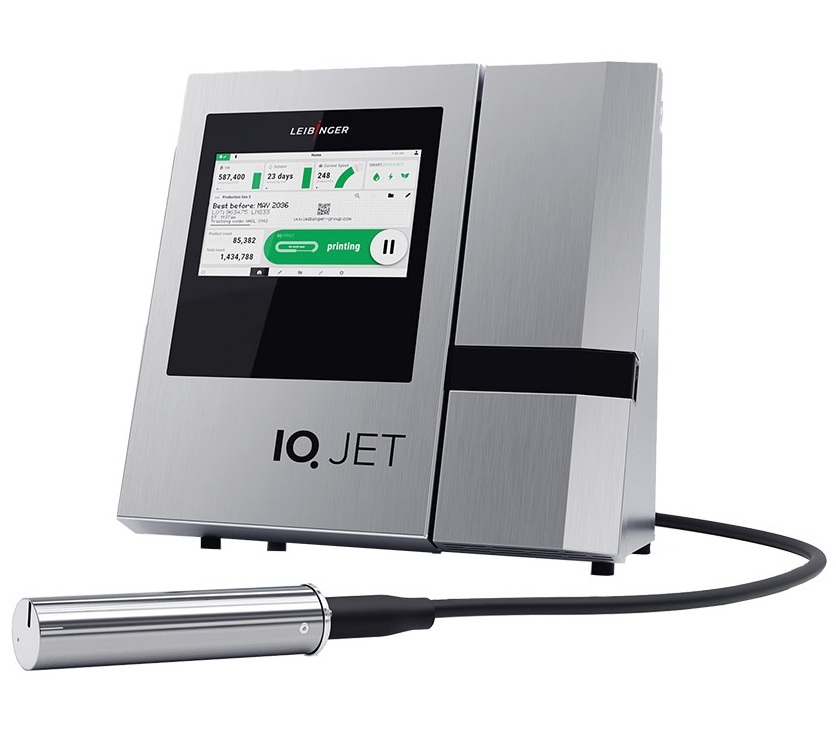
CIJ inkjet. It suits rigid or flexible plastic parts moving at high speed. It prints without contact on caps, tubes and bottles. The
IQJET handles variable data and consistent quality with a hermetic ink system during pauses.
Thermal inkjet. TIJ provides sharp printing for text, barcodes and variable information when print distance and surface conditions are controlled. Cartridge and ink selection are critical on non-porous plastic.
TTO. TTO is recommended for plastic films and flexible packaging. The ribbon transfers ink accurately onto the film. The
NG and
53K ranges suit applications requiring strong durability and reliable resin-ribbon management.
Prepare the surface before printing
Identify the polymer, corona or plasma treatment, mould-release agents, oils and varnish. Keep the print zone as clean and stable as possible. On an extrusion line, include speed and product temperature in the trial. Printhead distance must remain constant, with rigid mounting and synchronized triggering.
How can you achieve good adhesion?
Select ink formulated for the material and required resistance. Fast-drying ink is useful when products are handled immediately, but it must be tested on the exact surface. On glossy plastic, test after rubbing, condensation and contact with process products. Check more than appearance: verify barcode readability and durability after storage and washing.
Common problems
- Bleeding: ink or settings unsuitable for a non-porous surface.
- Fading: insufficient adhesion or incomplete resistance testing.
- Distorted characters: variable speed without an encoder or unstable distance.
- Low contrast: colour unsuitable for the plastic.
- Shifted message: sensor position or recipe error.
Which ALLEN FRANCE solution?
For rigid plastic and bottles,
IQJET CIJ provides contactless printing and high availability. For flexible film,
53K or
NG2+ provide thermal transfer for variable data. For plastic-coated cartons and secondary packaging,
X72 can be assessed according to the surface.
Conclusion
Plastic marking requires a material-ink-technology approach. Identify the surface, define durability requirements and test under real production conditions to obtain a readable and durable mark.
ALLEN FRANCE, distribuidor oficial de Allen Coding y Diagraph desde 1984, acompaña a los industriales en sus proyectos de marcaje y trazabilidad. Nuestros técnicos se encargan de la instalación, la formación y el mantenimiento de sus equipos en toda Francia, con stock permanente de consumibles y repuestos. Contacte con nuestros expertos para un presupuesto gratuito y una demostración sobre sus propios productos.